
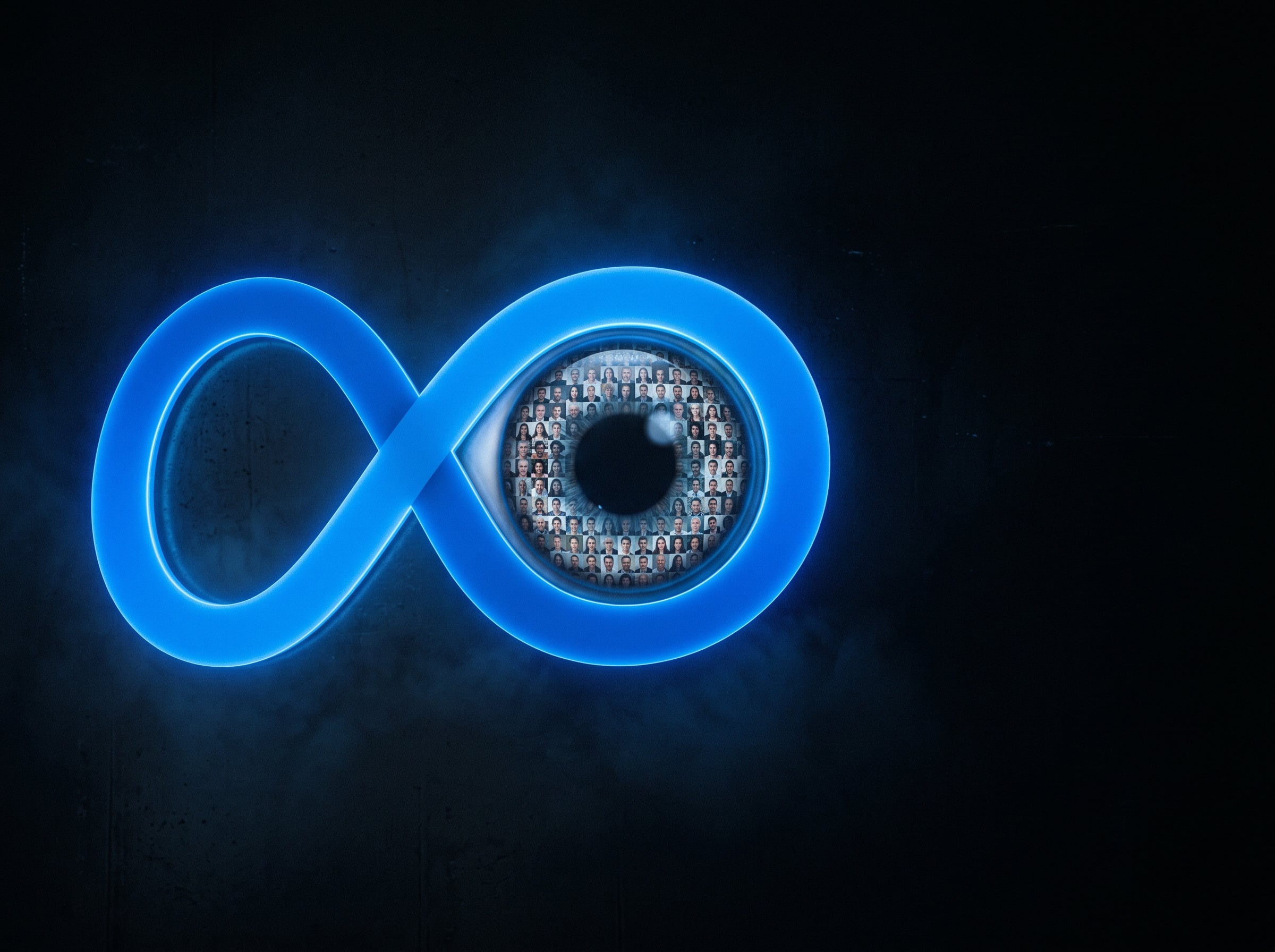
What Muse Image is, what it actually does, and why the way it was born draws the line between using AI and letting AI use you.
On July 7 Meta unveiled Muse Image and teased Muse Video. They are the first image and video models from Meta Superintelligence Labs, the division the company built to fight on the front line of AI.
Let me tell you exactly what is going on. No noise.
What Muse Image is
It is an image generator. A good one. In the Arena rankings by human preference it sits at number 2 in text to image, in single-image editing and in multi-image editing, measured on July 5. Muse Video comes in at number 3 in text to video. Translation: it is competitive, it goes toe to toe with Google's Nano Banana 2 and OpenAI's GPT Image 2, but it does not lead.
Technically it has interesting tricks. It works like an agent: it searches the web, writes code to nail details and reviews its own work before delivering it. It composes from several references. It edits with precision. It is already available in the Meta AI app and on meta.ai, in Instagram Stories in the United States and on WhatsApp in some countries. Facebook comes later.
So far, just another launch in a year full of launches.
Where the real problem is
The problem is not the quality. It is how it is fed.
Muse Image lets anyone @ mention a public Instagram account inside a prompt. The model takes the public photos of that account and builds a new image with them. With your face. Without asking you.
And here is what matters: public adult accounts are opted in by default. If you do not want it, you have to opt out yourself. It is opt-out, not opt-in.
Meta does set limits, and that has to be said honestly. Private accounts are excluded. Accounts of under-18s too. The company says it can be turned off in 2 clicks and that every image carries an invisible watermark, Content Seal, to show it is AI.
But the caveats do not cover the essentials:
- They do not warn you. If someone is generating images with your face right now, you get no notification. You only find out if you stumble across them.
- Turning it off is not retroactive. Flipping the switch stops what comes next. What was already generated stays.
- The switch is buried. Settings, "Sharing and reuse", and there you turn off posts and reels.
Organizations like Privacy International and Foxglove, and outlets like the BBC, have already flagged it. In Europe this runs straight into GDPR and biometric data protection.
The line that really matters
I work with generative AI every day. That is why what I am about to say is not abstract moralizing.
There are 2 ways to use these tools.
One is the default: take material that is not yours, without permission, and trust that nobody complains.
The other is to start from consented material, with clear rights, and leave a trace of what comes out.
The funny thing is that the only good part of Meta's launch points exactly there. Content Seal is provenance. It marks the image as AI-generated even if you crop it or screenshot it. That is not decoration. In August 2026 the EU brings in the obligation to label AI-generated content to the user. The direction is clear.
What you take away from all this
The model is no longer the differentiator. A generator landing at number 2 in a ranking is any given Tuesday. There will be another one in a month.
What separates using AI from AI using you comes down to 3 things: consent, provenance and labeling. They are not extras. They are the basics.
Meta has decided to skip the first one by default. You do not have to accept it just like that.
PS: if you have a public Instagram account and you do not want your photos feeding this, go to Settings, "Sharing and reuse", and turn off posts and reels. 5 minutes. Do it today.
Source
- Meta AI (official source): Introducing Muse Image and Muse Video