
For years, video has been an almost final piece.
You could cut it, trim it, grade the color, swap the music or add graphics. But if a scene was missing, if the shot didn't work, if the framing didn't fit or if you needed another real version of the content, the answer was clear: produce again.
Reshoot. Redo. Back to the set.
AI is starting to change that logic.
The leap isn't just generating videos from text. That already matters, but it's not the deepest part. The real change is that AI is starting to understand video as an editable scene. It understands subjects, motion, space, light, action and context. And when it understands the video, it can modify it.
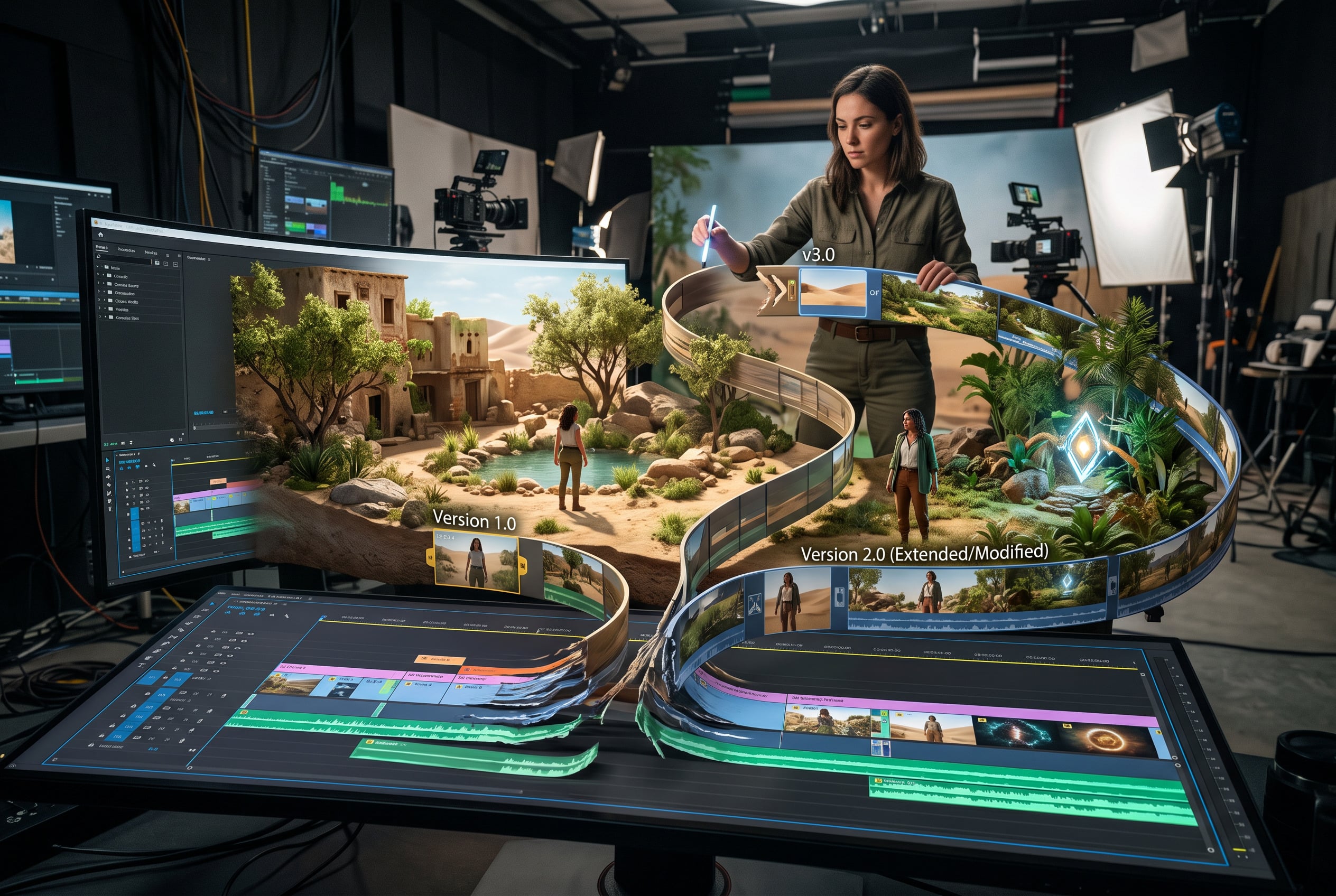
Google frames this quite clearly with Gemini Omni Flash and Flow. In the technical documentation, the model appears as gemini-omni-flash-preview and is built for video generation and conversational editing. You can create a clip, keep interacting with that same result and ask for changes in natural language. It's not just making a new clip. It's iterating on an audiovisual piece with instructions.
Magnific points in the same direction with Kling O1. The model works with text, image and video as references, and opens a very concrete door: using an existing video as the base to transform a scene, modify it or generate visual continuity.
This changes the conversation.
Until now, when a brand needed to adapt a horizontal video to vertical, add a situation that was never shot or create an alternative version of a scene, there were two paths. Either accept a limited fix in post, or produce new material.
The first phase of this revolution has been reproducing with AI. That is: generating a similar scene again, rebuilding a clip, creating an alternative version from references. That's already useful. It already saves time. It already makes pieces viable that didn't add up before because of cost, schedule or logistics.
But the near future points to something more interesting: editing directly on the final video.
Not redoing the whole clip. Not starting from scratch. Not rebuilding an approximate scene. Editing the already produced piece as if it were still alive.
Changing the format without losing visual intent. Extending an action. Cleaning up an element. Altering a gesture. Adding an object. Modifying an environment. Creating a shorter, more vertical, more commercial or more editorial version without going through the whole traditional process again.
Not everything is solved. Consistency is still the big battleground. So are duration, fine control, character identity, rights over references and reliability in professional workflows. But the direction is obvious.
Video stops being a closed file and starts being a living asset.
For the content creation industry, this is huge. Campaigns will no longer have to be planned as one final piece plus a few minor adaptations. They can be planned as visual systems. The same idea will be able to live in multiple formats, durations, contexts and levels of detail.
This doesn't remove creative direction. It makes it more important.
When technology lets you touch almost anything, the problem is no longer just technical. It's a matter of judgment. What to change. What to keep. What makes a piece feel real. What keeps a brand tasteful. Which part of the content needs precision and which part needs soul.
At GROS we work exactly at that point: AI visual production with human direction. From brief to master. Hyperrealistic, adaptable pieces, ready for campaigns. Days, not weeks. No shooting when shooting isn't needed.
More about our approach to AI audiovisual production: GROS.
Content creation is heading toward a simple idea: fewer rigid pieces, more editable pieces.
Before, you shot and then accepted the limits of the material.
Now you can reproduce with AI.
Next comes editing on the final video.
And when that becomes stable, professional and accessible, the standard will change. Not because AI makes videos on its own. But because it will allow producing content with more margin, more versions and a longer useful life.